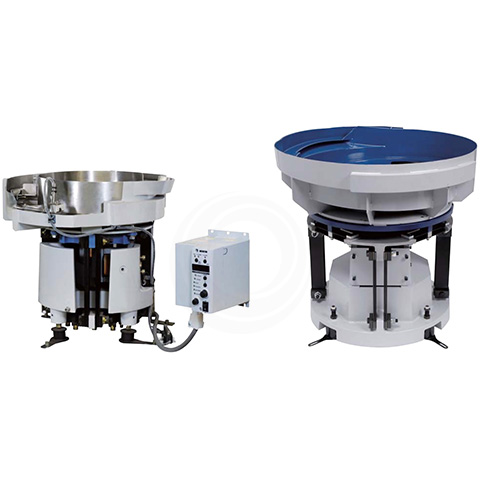
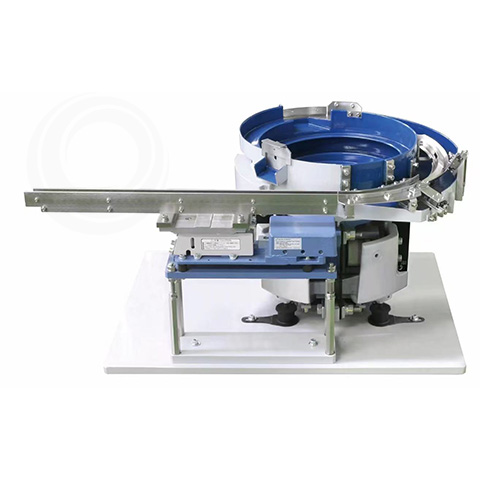
Vibratory feeder is an automated feeding device commonly used in manufacturing and assembly industries. It can automatically arrange bulk parts in a directional manner and transport them to a specified location. Vibratory feeder uses electromagnetic drive or eccentric motor to drive the vibrating chassis, so that the parts move forward along the track under the action of vibration force. By designing the slope, width and baffle of the track, the parts are arranged in a predetermined direction and finally enter the production process.
Application areas of vibratoryfeeder
Electronics industry: Arrangement and transportation of small electronic components such as capacitors, resistors, connectors, etc.
Hardware industry: Automatic feeding of small metal parts such as screws, nuts, springs, etc.
Pharmaceutical industry: Automatic feeding of pills, bottle caps, and syringe parts.
Plastics industry: Transportation of light parts such as plastic shells and buttons.
Vibratory Feeder Classification
Classification by Frequency
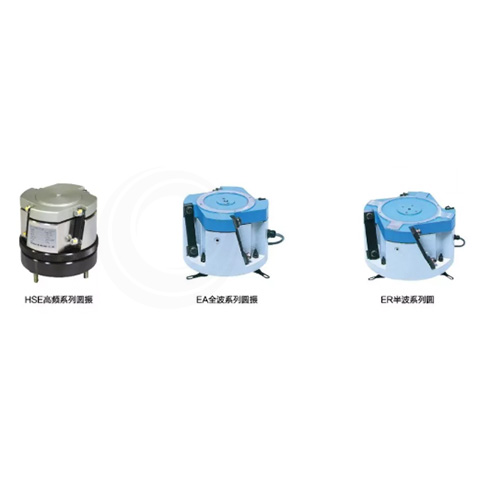
Half-wave Feeder (50~90Hz);
Full-wave feeder (100~180Hz);
High-frequency Feeder (180~500Hz);
Fully Intelligent Dual-drive Feeder.
Structure of the Vibratory Feeder
Vibration drive part: circular vibration, direct vibration;
Sorting feeding part: upper plate, linear track, guide parts to be transported in the set direction.
Refilling part: silo, elevator;
Control part: sensor, controller, adjust vibration frequency and intensity to adapt to different types of parts.
Basic Workpiece Selection Method of Vibratory Feeder
Mechanical sorting: Workpiece sorting is performed by designing and manufacturing different mechanical structures.
Sensor sorting: Workpiece sorting is performed by reading the data volume change of a certain point of the workpiece through the sensor.
CCD sorting: Workpiece sorting is performed by reading the data volume change of the entire workpiece through the CCD.
Three-dimensional vibration sorting: Workpiece sorting is performed by performing three-dimensional vibration according to instructions through a special vibration table.
Difference between Intelligent and Ordinary Vibratoty Feeders
Ordinary type: Due to changes in operating conditions at the equipment site, the resonance frequency of the feeder often drifts, affecting the feeding speed. At this time, manual adjustments can only be made frequently.
Intelligent type: It adopts automatic tracking system to monitor vibration changes in real time. The controller automatically sends control signals for automatic adjustment to keep it running in the best condition at all times.
Difference between the Use of Silos and Elevators
Silo: Direct vibration progressive, small quantity feeding for vibrator;
Elevator: Uses a motor to increase the height, and replenishes the silo in large quantities at one time (in principle, do not use an elevator to directly feed a large amount of material to a high-speed rotating vibrator at one time, as this will damage the vibrator over time).
Advantages and disadvantages of using one feeder or one feeder with multiple tracks to feed multiple workpieces
Conclusion: The disadvantages outweigh the advantages. Using one feeder to feed multiple workpieces may seem economical, but it actually increases the probability of failure; using one feeder to feed multiple tracks also increases the probability of failure, which will ultimately increase costs. For automation equipment, "reliability" is the first priority. Dedicated vibrators are used for dedicated purposes, and single- vibrator is the most reliable.
How should automation equipment manufacturers choose vibratory feeders?
Some automation equipment manufacturers often design the equipment before looking for a feeder to match. It often happens that the feeder cannot be connected to the equipment, or even cannot be made, and the later cost will be greatly increased. The correct approach is: in the design and conception stage of the automation equipment, it is necessary to communicate seriously with the feeder manufacturer to select the best vibrator production plan. This will invisibly greatly improve efficiency and save costs, and avoid problems that cannot be solved later.
Daily Maintenance of Vibratort Feeder
Insist on cleaning the feeder every day. As the workpiece rotates in the feeder, there will be more or less residues attached to the feeder. If not cleaned in time, these residues invisible to the naked eye will harden on the material channel in the tray over time and form an invisible sliding film. In severe cases, it will make it difficult to feed the workpiece, affecting the feeding speed and normal work.
The specific meaning of the achievement rate of 99% to 99.9% in the feeder specification
Due to the different shapes of workpieces and the fact that feeders are basically handmade, at the current level of technology, no manufacturer in the world dares to promise: "100% of the feeding quantity is achieved, 100% of the materials are not stuck", and the feeder can be 100% successful". Therefore, "the achievement rate of 99%~99.9%" refers to the probability of success, which is the specification standard set by the Japan Feeder Association.


 Photos
 Customers who bought this product also bought