Argon Arc TIG Welding Machine | Multi-function High-Frequency Inverter DC/Pulse | Specially Designed for Thermocouples, RTDs, and heating elements Protection Tubes
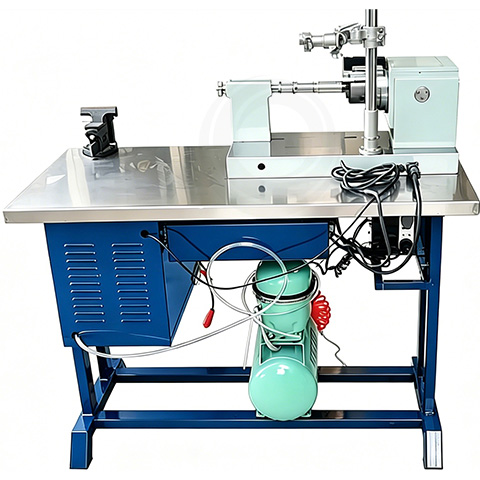
This multi-function high-frequency inverter DC/pulse argon arc welding system is developed by absorbing advanced international technology and incorporating multiple patented inventions. It integrates a welding rectifier and an argon arc welding control system into one unit. Its reliability and welding performance are superior to conventional models, reaching an internationally advanced level.
It can weld stainless steel, carbon steel, and high-temperature alloy steel with thickness from 0.15 to 7 mm, suitable for both industrial automated welding and manual welding applications.
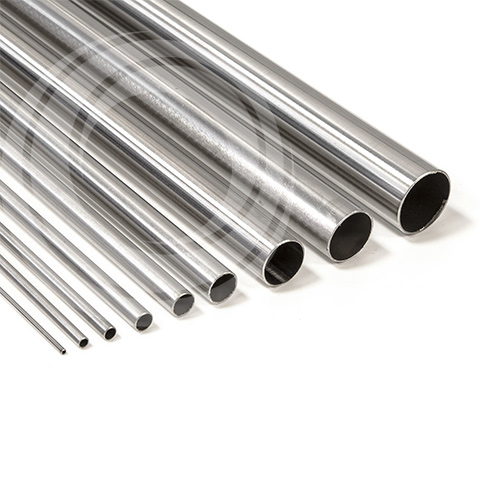
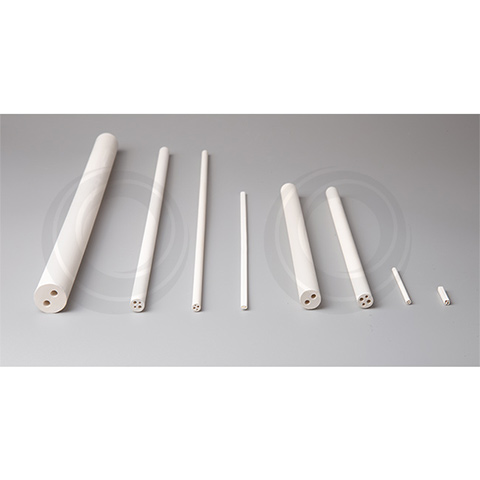
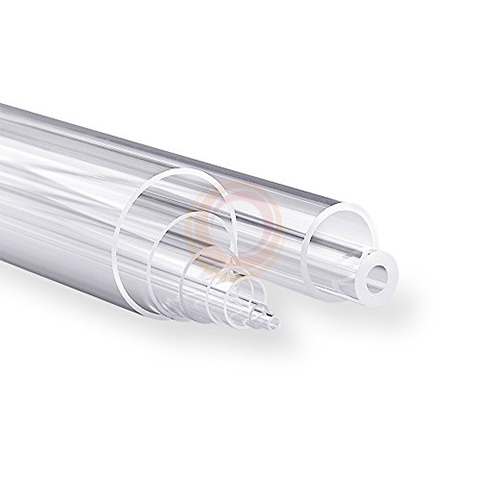
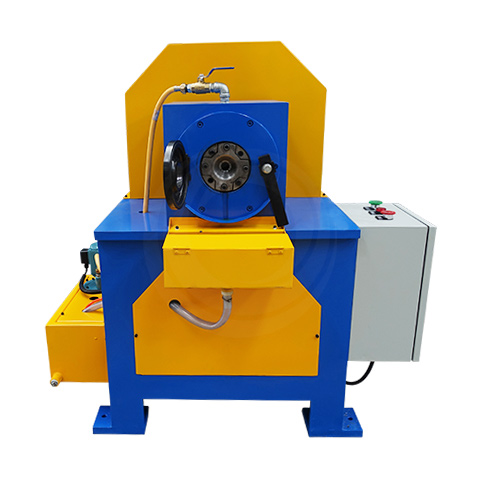
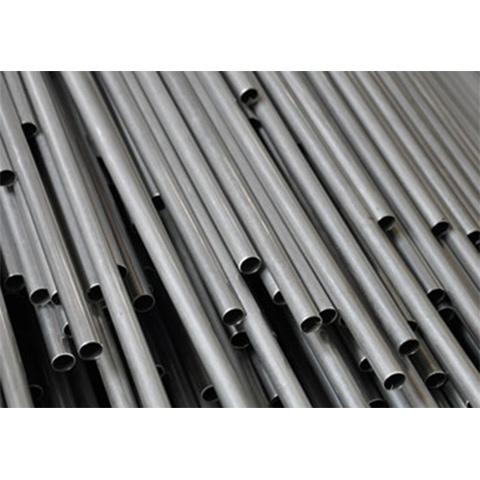
The most distinctive feature of this equipment is that it has been specially designed by industry experts for welding temperature instrument sheathed assemblies, including thermocouples, RTDs, and Protection Tubes for electric Heaters, as well as Flanges, fixing threads, bolts, retaining rings, baffles, and other related components.
It enables standardized and process-oriented welding of φ3–φ8 sheathed platinum RTDs and φ1–φ22 electric heater assemblies, making the operation simple, clear, and highly efficient. It is an essential production equipment for manufacturers of temperature measurement instruments and the electrical heating industry (including electric heating element manufacturers).
Main Technical Parameters
| Input Power | Single-phase 220V±15% 50±2Hz |
| No-load Voltage | 60V±10V |
| Rated Welding Current | 130A |
| Minimum Welding Current | 3A |
| Peak Current | 3A~130A |
| Base Current | 3A~100A |
| Pulse Frequency | 0.25~30Hz |
| Duty Cycle | 60% |
| Arc Ignition Method | Non-contact high-frequency arc starting |
| Weight | 146Kg |
| Dimensions | 1200×530×1500mm |
TIG Welding Parameter Table (For Reference Only)
Welding of Sheathed Thermocouples
DC mode (pulse mode is not required for thermocouple welding)
| Diameter ( mm ) | 1 | 1.5 | 2 | 3 | 4 | 5 | 6 | 8 |
| Type | | | Current (A) | | | |
| Ground-contact sealing type | 5 | 5 | 7 | 8 | 13 | 15 | 15 | 20 |
| Insulated sealing type | 3 | 3 | 5 | 10 | 13 | 15 | 18 | 22 |
| Sheathed thermocouple wire | 2 | 3 | 3 | 4 | 5.5 | 6 | 6 | 8 |
Note:
For insulated thermocouple wire welding, both upslope time and downslope time are set to 0.
For other cases, upslope time is 0.5 s, argon pre-flow time is 0.1 s, and downslope time is 1 s.
Argon flow rate is approximately 5 L/min.
Welding of Sheathed Platinum RTDs
DC Mode
| Item | Rotation Speed (r/min) | Welding Current (A) | Argon Flow Rate (L/min) |
| Pipe Diameter (mm) | 3 | Type | Sealing | 6 | 6 | 5 |
| Circumferential seam | 6 | 5 | 5 |
| 4 | Sealing | 5 | 7.5 | 5 |
| Circumferential seam | 5 | 6 | 5 |
| 5 | Sealing | 5.5 | 9 | 5 |
| Circumferential seam | 5.5 | 8 | 5 |
| 6 | Sealing | 6.5 | 13 | 5 |
| Circumferential seam | 6.5 | 10 | 5 |
| 8 | Sealing | 6.5 | 17 | 5 |
| Circumferential seam | 6.5 | 13 | 5 |
Note:
Upslope time: 0.5 s
Argon pre-flow time: 0.1 s
Downslope time: 1 s
Welding of Flanges, Fixing Threads, Bolts, and Tubes Matching Sheathed Thermocouples and RTDs
Pulse Mode
| Sheathed Tube Diameter (mm) | 3 | 4 | 5 | 6 | 8 |
| Base Time(S) | 0.2 | 0.2 | 0.2 | 0.2 | 0.2 |
| Peak Time(S) | 0.4 | 0.4 | 0.6 | 0.6 | 0.8 |
| Base Current (A) | 3 | 3 | 4 | 5 | 6 |
| Circumferential Welding Current(A) | 6 | 7 | 8 | 10 | 12 |
| Circumferential Welding Speed(V) | 6 | 5 | 5.5 | 6.5 | 6.5 |
| Argon Flow Rate(L/min) | 5 | 5 | 5 | 5 | 5 |
Note:
Upslope time: 0.5 s
Argon pre-flow time: 0.1 s
Downslope time: 1 s
Welding of Thermocouple/RTD Assemblies with Matching Flanges, Fixing Threads, and Tubes
Pulse Mode
| Tube Diameter (mm) | 6 | 8 | 10 | 12 | 16 | 20 | 22 |
| Base Time(S) | 0.2 | 0.2 | 0.5 | 0.5 | 0.5 | 0.5 | 0.5 |
| Peak Time(S) | 0.8 | 0.4 | 1 | 1 | 1 | 1 | 1 |
| Base Current (A) | 5 | 18 | 20 | 25 | 28 | 35 | 40 |
| Welding Current (A) | 8~10 | 38 | 50 | 60 | 65 | 75 | 80~90 |
| Welding Speed(V) | 6 | 4 | 5 | 5 | 5 | 5 | 5 |
| Argon Flow Rate(L/min) | 5 | 5 | 5 | 5 | 5 | 5 | 5 |
Note:
Upslope time: 1 s
Argon pre-flow time: 0.2 s
Downslope time: 1.2 s
Welding of End Caps for Electric Heating Elements
DC Mode
| Heating element tube diameter(mm) | Argon Flow Rate (L/min) | Rotation Speed (r/min) | Welding Current (A) (A) |
| 6.3~8.0 | 5 | 17 | 13 |
| 8.0~10 | 5 | 15 | 15 |
| 10~13 | 5 | 13 | 17 |
| 13~16 | 5 | 10 | 20 |
| 16~18 | 5 | 8 | 25 |
| 18~22 | 5 | 7 | 30 |
Note:
Upslope time: 0.5 s
Argon pre-flow time: 0.5 s
Downslope time: 1.5 s
For DC mode, base current, peak time, and base time are not active and do not require adjustment. The rotation speed should be adjusted accordingly: higher welding current requires higher rotation speed, while lower current requires lower rotation speed.
This data above is provided for reference only. Experienced welders may adjust and optimize the process parameters based on practical conditions to obtain more accurate and suitable welding settings.


 Photos
 Customers who bought this product also bought