RTV High-Temperature Silicone Rubber Sealant | Room temperature cure
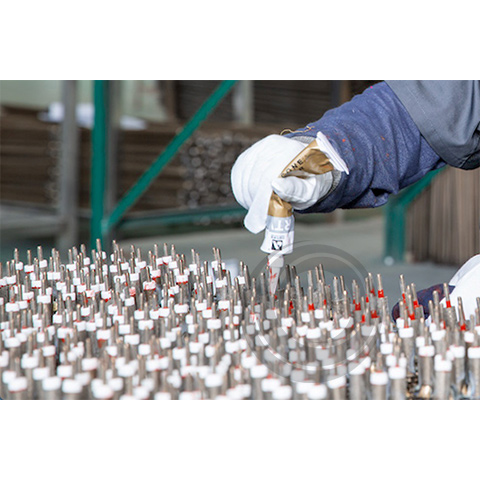
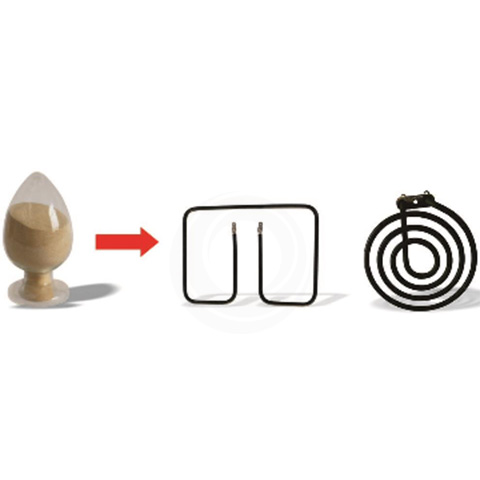
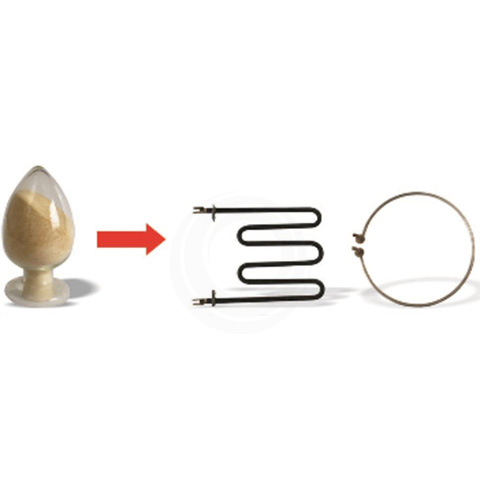
RTV Silicone Rubber Sealant is the simplest way to seal electric heating tubes, and it is flexible to use during the sealing process. It is used to seal the tube mouth after directly or indirectly draining the moisture from the electric heating tube. The filled Mgo powder will be dug out to a depth of 2~4mm, and then the insulator is inserted. Sometimes the tubes are sealed directly. Generally, tubes filled with medium and low temperature MgO powder is sealed in this way, such as composite disc aluminum electric heating tube, copper-plated iron tube and immersion copper electric heating tube.
Rtv Silicone Rubber sealant has different application scopes, and should be selected according to the specific requirements of the products. However, this sealing method is not suitable for electric heating tubes filled with high-temperature MgO, for it will cause electrical performance degradation over time. The final decision needs to be made based on the product.
Brief Introduction
RTV silicone rubber sealants are made of silicone rubber, crosslinking agent and filler. RTV silicone rubber is a solvent-free, non-corrosive, one-component room temperature vulcanized silicone rubber. It has a long storage period and stable performance. It can bond common metal and non-metal materials, so it is suitable for bonding and sealing various metals and non-metal materials. As a material used for bonding, sealing, insulating, moisture-proof and shock-proof, it is widely used in the bonding and sealing of electronic components, semiconductor materials, electronic and electrical equipment, the waterproofing and sealing of electric Heaters and electronic instruments, and the potting of electronic components.
RTV silicone rubber sealant is a kind of room temperature vulcanized rubber. RTV is short for room temperature vulcanized silicone rubber, referring to the rubber that can be vulcanized in room temperature. Usually, the two ends of the molecular chain contain active groups such as hydroxyl and vinyl, and the molecular weight is relatively low. There are two types RTV silicone rubber sealant: single-component room temperature vulcanized silicone rubber and two-component room temperature vulcanized silicone rubber.
Performance and application
The RTV silicone rubber sealant developed by our company for electric heating elements is single-component room temperature vulcanized silicone rubber. It can be stored for a long time (more than half a year) in a metal hose or sealed container. When it comes into contact with air, it will absorb moisture in the air and cure. This moisture-proof and corona-proof product is a neutral silicone sealant, which has good bonding and sealing properties for most materials. It is excellent in electrical insulation. In addition, it has shock-absorbing and buffering effects, and it can withstand high and low temperature. This product is non-toxic. It is resistant to weathering and has a long service life. It neither contains any solvents, nor leak oil. It has excellent comprehensive performance. It is mainly used for bonding and sealing of electric heating tubes, electric heaters, and other high-temperature resistant occasions, as well as sensor surface insulation and water-resistant protection.
Common models for electric heating tubes
| Test items | RTV-704T | RTV-816T | RTV-451R |
| Maximum operating temperature(℃) | -60~+200 | -60~+280 | -60~+260 |
| Before curing | color | white | red | red |
| state | flow | flow | paste |
| viscosity(pa·s) | 15~35 | 40~60 | 15~35 |
| density(g/cm3) | 1.05~1.25 | 1.10±0.05 | 1.20±0.05 |
| Surface drying time(min) | 3~30 | 10~30 | 10~30 |
| After curing | Physical properties | tensile strength(Mpa)≥ | 0.8 | 1.5 | 0.8 |
| Elongation at break(%)≥ | 150 | 200 | 150 |
| Shore Hardness(A)≥ | 25 | 20 | 20~30 |
| Shear Strength(Mpa)≥ | 0.8 | 1.0 | 1.0 |
| Peel strength(KN/m) ≥ | 0.8 | 1.0 | 1.0 |
| Electrical properties | Dielectric constant(1MHz)≤ | 14 | 2.5~3.5 | 2.5~3.5 |
| Dielectric loss tangent ≤ | 5.0(1MHz) | 3.0×10 -2 (105HZ) | 3×10 -2 (105HZ) |
| Surface resistivity(Ω· ㎝)≥ | 1×10 -2 | 1×10 14 | 1×10 14 |
| Volume resistivity(Ω· ㎝)≥ | 1×10 -2 | 1×10 14 | 1×10 14 |
| Dielectric strength(KV/mm)≥ | 14 | 15 | 15 |
| Linear shrinkage(%)≤ | 0.5 | 0.5 | 0.5 |
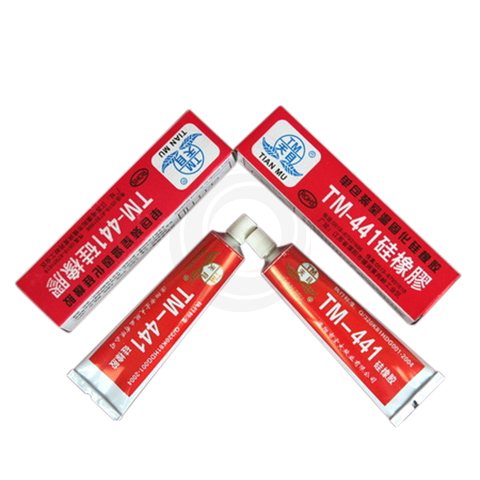
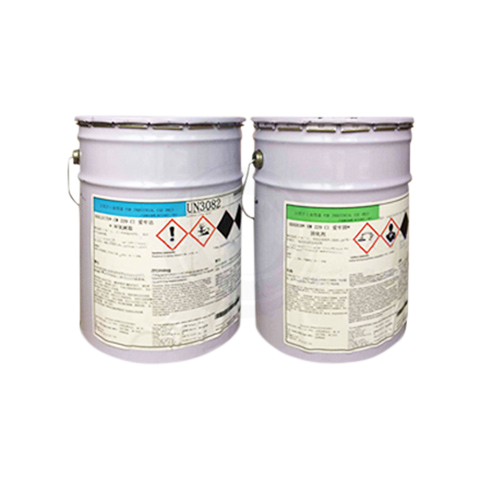
| Package | Customize | 45ml/ Metal hose,200pcs/box | - 45ml/ Metal hose,
- 200pcs/box
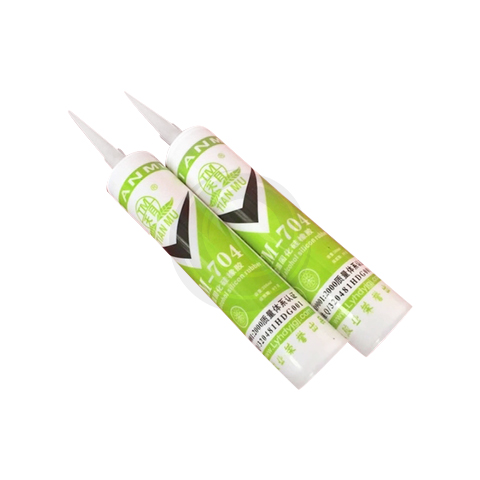
300ml/ Plastic pipe, 25pcs/box | 300ml/ Plastic pipe, 25 pcs/box 310ml/plastic pipe, 25 pcs/box |
Note: All data of curing status are measured after the sealant is cured for 7 days at 20~25°C and 40~70%RH.
Usage process
- Clean the surface: clean the surface of the object to be bonded or coated, and remove rust, dust and oil stains.
- Sealant application: For plastic tube packaging, cut the nozzle with a blade, put on the tip. Use a caulking gun to apply the sealant by pushing it onto the clean surface (As for the 45ml packaging, unscrew the cap of the tube to apply sealant), and then fix the bonded surface on it.
- Curing: Place the treated or sealed parts in the air to allow the sealant to cure naturally. The curing process starts from the surface to the inside. Within 24 hours (room temperature 25°C, humidity 50%), the sealant will cure to a depth of 2~4mm. As for the deep part, especially in a part that is not easily exposed to air, the fully-cured will be longer. The same goes to low temperature condition. Before further processing or packaging the bonded parts, it is recommended that users wait long enough so that the firmness and integrity of the bond are not affected.
Notes
After the operation is completed, the unused sealant should be immediately capped and sealed for storage. When using it again, if there is a little crust on the tip, just remove it, which will not affect usage. During the storage process, the sealant may also have a small amount of solidification at the hose mouth. After removing it, it can be used as before without affecting the product performance.
Storage and transportation
It should be stored in a dry and ventilated environment away from light and heat (it can be transported and stored as non-dangerous goods);
The storage period is 6 to 12 months (25°C).


 Photos
 Customers who bought this product also bought